

Did you know that today, approximately 78% of American households and roughly 94 million families display a Christmas tree during the holiday season? But why? Most people set up their trees and arrange presents beneath them without knowing the history of the tree or the traditions connected to it. Have you ever wondered why you do it, too?
In 2018, my eyes were opened to a different perspective on Christmas, and I’ve never been the same since. Watching a video about the holiday’s origins led me to embrace a life without celebrating it anymore.
Today, I’d like to focus specifically on the History of the Christmas tree and how it evolved over time, how it became a centerpiece around the world, and whether it aligns with Scripture.
Timeline and History
The Christmas tree didn’t start as a modern tradition; its roots go back thousands of years to Ancient Egypt. Many customs regarding the tree revolve around the worship of different deities. In this study, we will focus on the gods or folkloric figures associated with these practices, as well as the specific greenery and decorations used throughout time.
Happy Reading!
Ancient Egypt
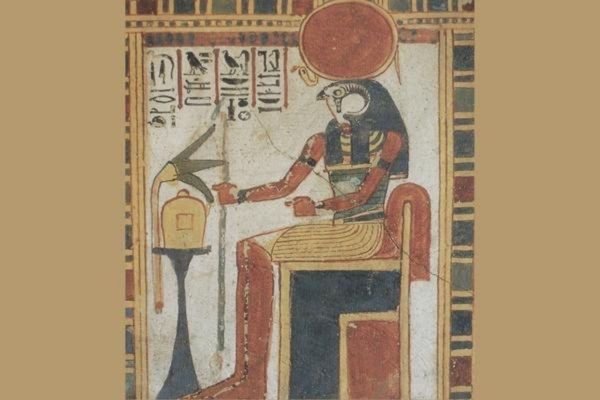
The furthest we can trace the practice of using greenery in winter is back to Ancient Egypt. Between 2500 and 1000 BCE, the Egyptians worshipped the sun god named Ra. He was often shown with the head of a hawk, crowned by a solar disk and a cobra, symbolizing his supreme power over creation and the sun. The Egyptians paid close attention to the sun because It guided their sense of time, the changing seasons, and even how they lived their daily lives.
The Egyptians believed that during the winter solstice, the shortest day of the year, Ra had became weak and sick. They viewed the solstice as a turning point because it marked the moment Ra would begin his recovery. As the days slowly grew longer, it marked the return of his strength, promising the eventual return of summer.
To celebrate Ra’s recovery and his triumph over the death of winter, the Egyptians filled their homes and sacred temples with evergreens. They primarily used palm branches and papyrus reeds, as these plants stayed green all year round. These were not just decorations, but they were symbols of eternal life and the victory of light over darkness during the coldest and darkest time of the year.
Ancient Rome
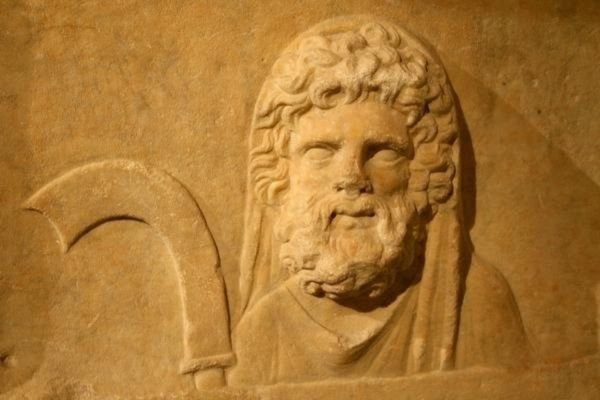
In ancient Rome, between the 3rd century BCE and the 4th century CE, evergreen plants were deeply connected to winter festivals. The most famous one was Saturnalia, which was a celebration honoring Saturn, the god of agriculture and abundance. Romans would decorate their homes, temples, and public spaces with boughs of laurel, holly, and ivy. These evergreens had served as powerful symbols of fertility, protection, and the endurance of life throughout the winter months.
These plants were not just decorative, but they were used for ritual and spiritual purposes to honor Saturn and celebrate the hope that life would return the following spring. The exchange of gifts and the use of greenery during Saturnalia helped shape later holiday traditions, many of which still exist today in different forms.
Norse & Germanic Yule
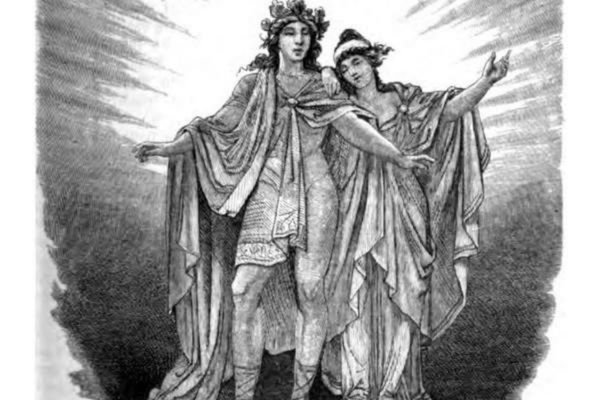
During the 10th century CE, the celebrations of the Norse and Germanic peoples centered on Yule, it was a festival marking the winter solstice. Evergreens played a important role, symbolizing life and hope during the harsh northern winters. These trees were spiritually connected to Yggdrasil, the great “World Tree” that held the cosmos together.
The god Balder, the god of light and purity, was a main figure of this season. According to myth, his death was caused by a mistletoe dart, and his rebirth followed the cycle of the sun. To encourage the sun’s return, the Norse and Germanic people would bring evergreen branches into their homes and the Yule log would be lit. These practices were deeply tied to honoring the gods and maintaining the spiritual order of the universe.
Medieval – Paradise Tree
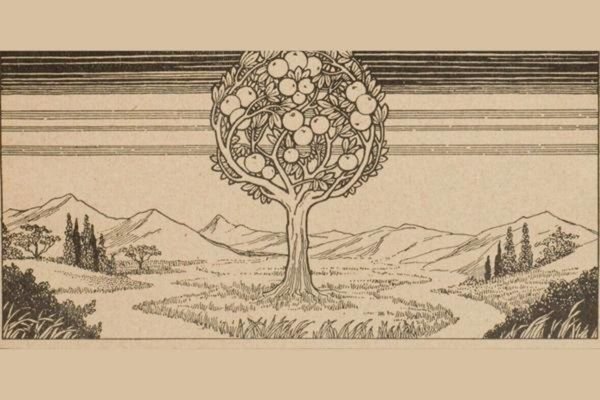
During the 14th and 15th centuries, a different kind of tree started to appear in the church mystery plays. These featured a Paradise Tree representing the Tree of Knowledge from the Garden of Eden. The tree was decorated with apples to symbolize the Fall of Man and wafers to represent redemption.
Over time, these trees moved from the church into private homes, especially around December 24th, the traditional feast day of Adam and Eve. This marked a significant shift, by incorporating earlier pagan greenery practices into Christian narratives, it created a bridge between old traditions and new religious meanings.
Germany & Strasbourg
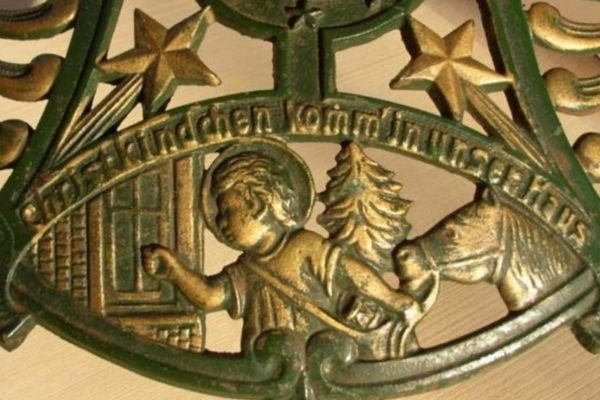
By the 16th century, decorated trees began appearing inside homes in parts of Germany, particularly Strasbourg. The trees were decorated with apples, paper roses, sweets, and candles. While these decorations symbolized life and light, the practice remained rooted in ancient evergreen traditions.
During the Reformation, Martin Luther sought an alternative to the Catholic Saint Nicholas. Which led to the introduction of the Christkind (Christ Child), intended to represent the infant Jesus as the gift giver. Families often displayed small figurines of the Christkind near the tree, blending Christian theology with ancient winter customs of renewal. Over time, the Christkind evolved from a baby into a blonde, angelic female figure, as people found it difficult to imagine an infant delivering gifts.
Victorian Britain & America
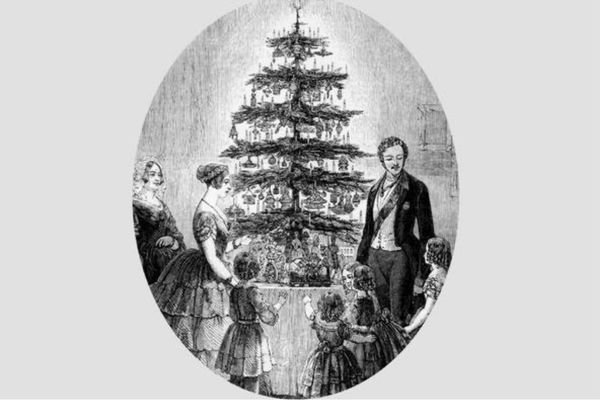
During the 18th and 19th centuries, the Christmas tree spread widely and became popular through the influence Queen Victoria and Prince Albert. By this time, the tree had become a family centered tradition, often disconnected from its earlier religious meanings. Yet, its core symbols like the light, gift giving, and evergreen life, remained rooted in pagan seasonal practices.
In the United States, St. Nicholas evolved into Santa Claus, a secular figure shaped by folklore and commercialism. It was during this period that gifts were consistently placed beneath the tree, uniting the ancient evergreen with the modern myth of Santa. Today, Santa functions as a god like figure, because he is often seen as omniscient, judging behavior, and rewarding or withholding gifts based on goodness. What began as ritual based seasonal practices eventually became a cultural tradition that many continue today without much thought about its origins.
Reflection: The Neutral Decoration?
After tracing the history of the Christmas tree, a clear pattern begins to appear: trees and evergreens were never neutral decorations.In cultures such as Ancient Egypt, Ancient Rome, and across Scandinavia, these plants were seen as powerful symbols connected to divine power and focal points for rituals. History shows that the tree was not simply decoration, but it was treated as something sacred.
Jeremiah 10:2-4
Scripture addresses this specifically. In Jeremiah 10:2, God issues a direct command: “Do not learn the way of the nations.” It’s not only about what we believe in our hearts, but a warning about what we practice. Jeremiah describes a custom that closely resembles traditions many people follow today:
“For the customs of the peoples are vanity; a tree from the forest is cut down and worked with an axe by the hands of a craftsman. They decorate it with silver and gold; they fasten it with hammer and nails so that it cannot move.”
(Jeremiah 10:3–4)
While some might argue that this is describing carving of a literal wooden idol, the underlying principle remains the same: bringing a piece of creation into the home and decorating it to make it “holy” for a season of celebration. Whether the gold and silver are literal or replaced with modern ornaments, the pattern reflects the ancient practices of the nations.
Worship and Syncretism
The issue is not whether a modern family intends to worship a Norse god. The issue is whether God accepts worship borrowed from pagan forms. In Deuteronomy 12:4, God warns His people not to worship Him the way the nations worshiped their gods under every green tree.
God demands worship that is Holy, which means “set apart” or “distinct.” He does not want to be mixed with other gods. This blending of beliefs is known as syncretism. If the history of the Christmas tree was used to honor the “rebirth of the sun,” can it truly be used to honor the “birth of the Son,” Messiah Yeshua?
A Call for Discernment
After seeing the historical journey of the Christmas tree, from the temples of Ra and the rituals of Saturnalia to the modern living room, how do you view this tradition?
What do you think?
- Should we continue in a tradition rooted in honoring other gods, or should we hold strictly to Scripture to keep the Father and the Messiah “set apart” as Holy?
- Do you believe the origins no longer matter because the modern intent has changed, or is the root of the tree still spiritually significant today?
While I can no longer find the exact video that opened my eyes back in 2018, the documentary below covers very similar ground. It explores the same historical shifts and scriptural questions that led me to change how I honor God.
Watch: Truth Or Tradition | Is Christmas Pagan?
SOURCES AND CITATIONS
Articles & Online Resources
Finance Yahoo – North America Christmas Tree Market Report 2025
Finder.com – Cost of a Christmas Tree
History.com – History of the Christmas tree
The National Christmas Tree Association – The History of Christmas Trees
Wikipedia – Yggdrasil /Ra / Saturnalia
Britannica – How did the Tradition of the Christmas Tree Start ?
The Medium – Saint Nicholas: The original Santa Claus
German Girl in America – What is the Christkind
Ironbridge – Victorian Origins


.JPG)


.jpg)